
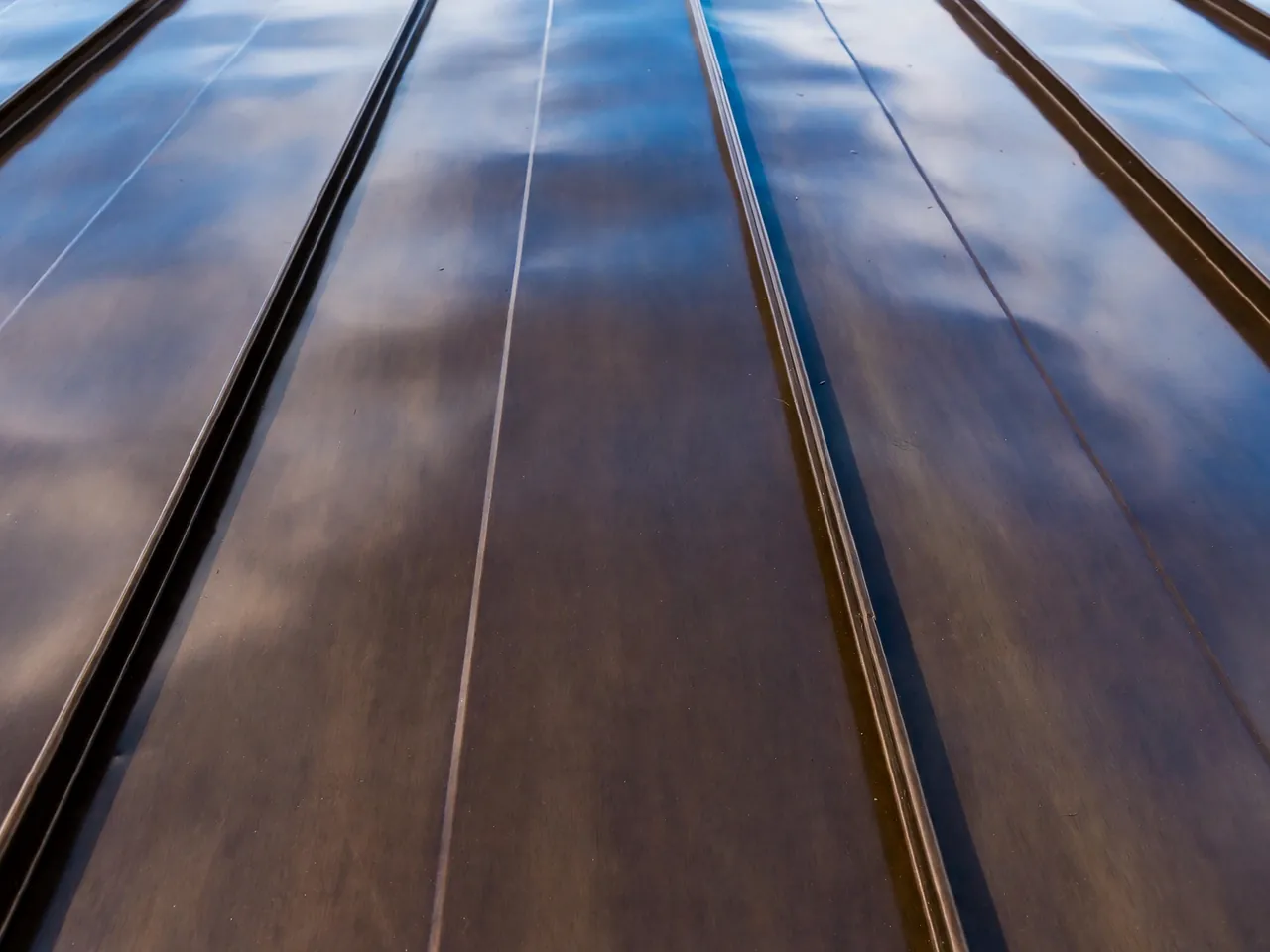
Metal Roofing
Metal Roofing in South Bend, IN
Metal roofing in South Bend, IN, is two different conversations wearing one name: standing seam, where the fasteners are concealed beneath raised seams, and exposed fastener, where the fasteners show and penetrate the panels. This page contrasts the two, explains snow and wind behavior in general terms, and states the historic-district constraint plainly: exposed-fastener corrugated metal is not approved in the HP Overlay, while standing seam may be considered. For the dominant material conversation, see shingle roofing. Call (574) 901-6308 during business hours.
Service overview
Metal Roofing: Two Systems, Contrasted Honestly
A metal roof is panels or sheets of metal, seamed and flashed to shed water, over underlayment and a deck. The consequential choice is how the panels are held down. Standing seam conceals the fasteners beneath raised, folded seams that run up the slope. Exposed fastener drives screws through the panels, leaving the fastener heads visible and creating many penetration points. That single difference drives the maintenance, weather, and district discussion that follows. The metal versus shingle post compares materials from the homeowner side.
This page names no brands, profiles, or product lines, and states no prices, because none were sourced for this business or this city. Snow behavior is described in general terms: metal sheds snow more readily than a rougher surface, which is a planning question for eaves, walkways, and gutters rather than a simple advantage. Wind behavior is judged against the 115 mph design wind speed in the code values. The roof replacement page covers the permit and approval steps that apply to any re-roof, including metal.
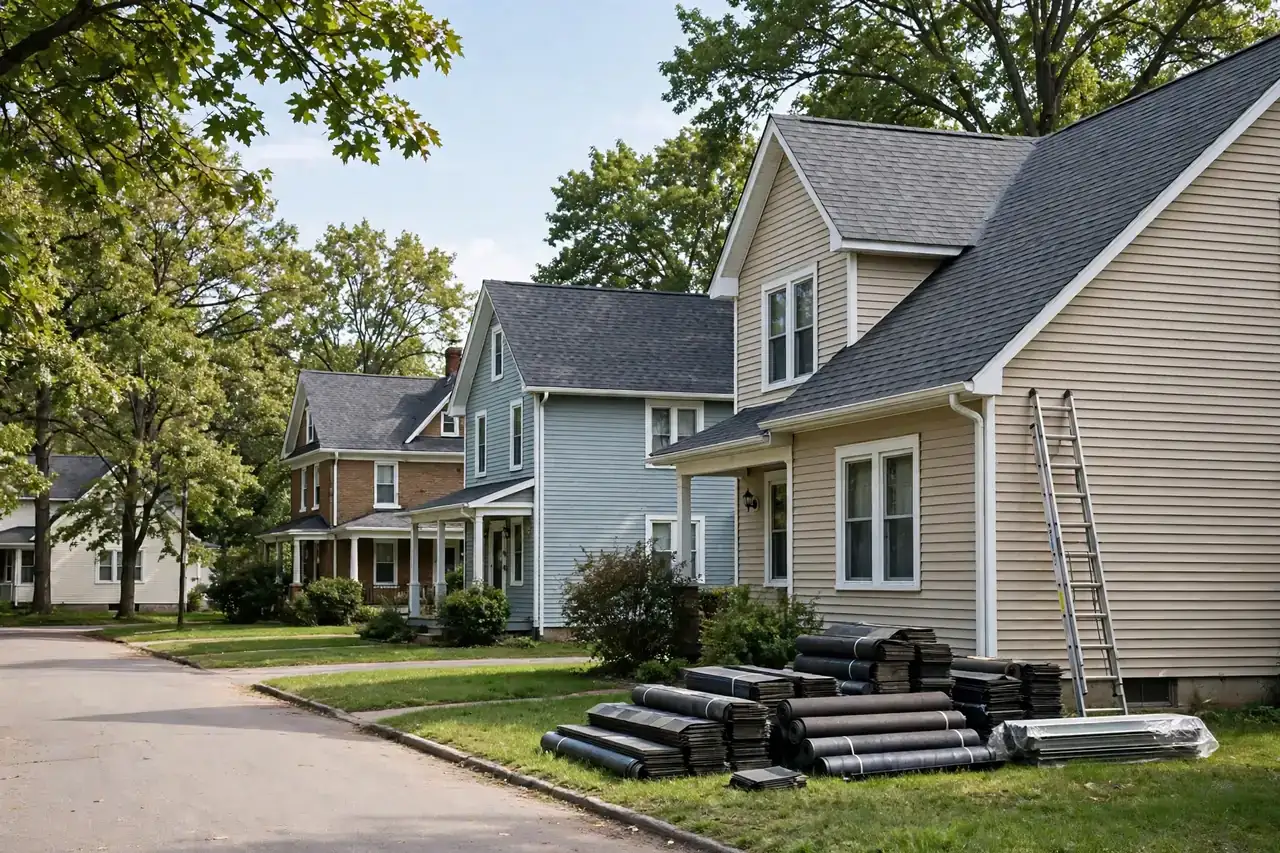
The contrast
Standing Seam and Exposed Fastener, Side by Side
The contrast below is about fastening, and everything follows from fastening.
Standing seam: concealed fasteners
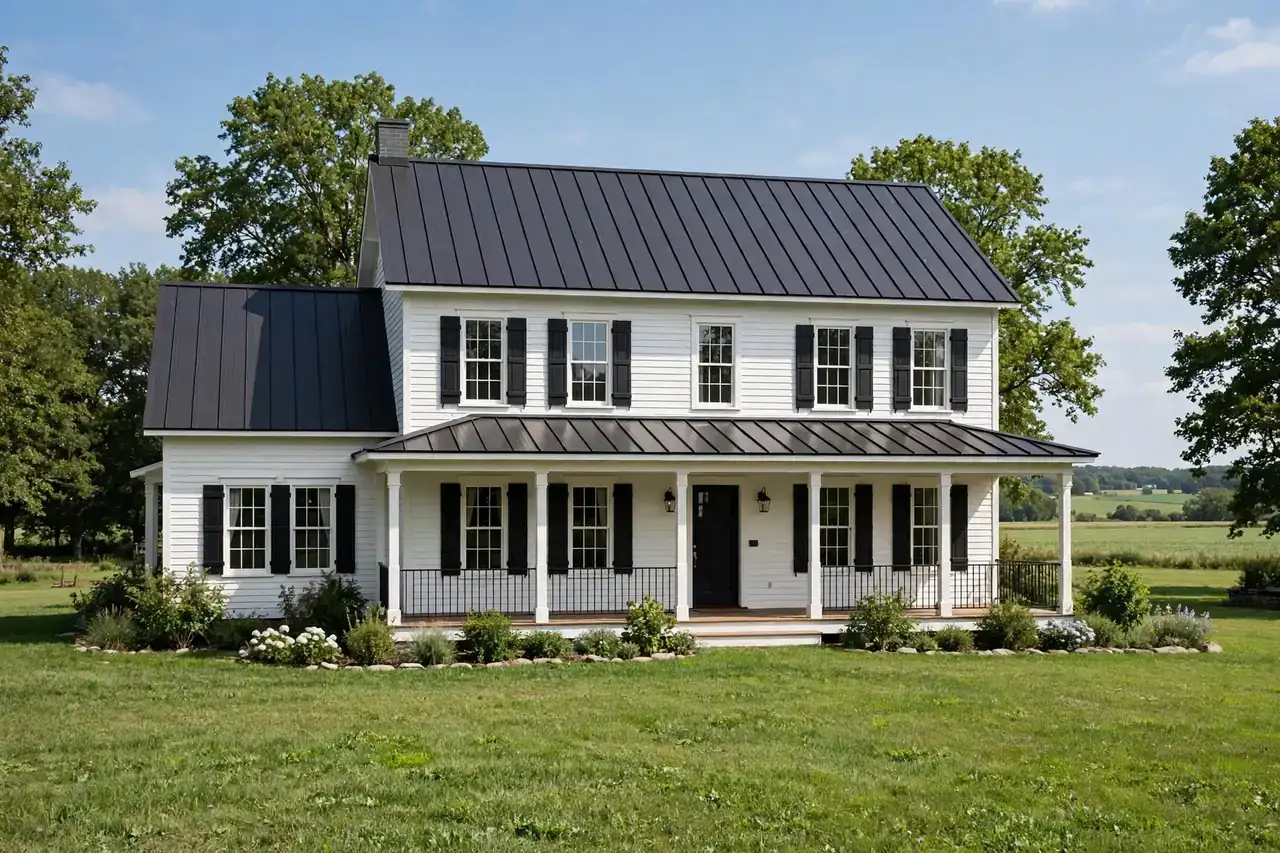
Fasteners are hidden beneath raised seams, so the weathering surface has far fewer penetration points. Seams run up the slope and are folded or locked. The system is discussed in the district context below, where it may be considered.
Exposed fastener: visible fasteners
Screws pass through the panels, with washers sealing each penetration. The fasteners are visible, numerous, and exposed to weather and movement, which makes their condition a recurring check over the roof's life.
Snow behavior, generally
Metal sheds snow more readily than rougher coverings, so snow movement off the roof, and where it lands, is a planning question for eaves, entries, and gutters. The 30 psf ground snow load in the code values frames the load side.
The district constraint
Under the Historic Preservation Commission Standards and Guidelines, exposed-fastener corrugated metal is not approved in the HP Overlay, and standing seam may be considered. That constraint can decide the system question before any other factor is weighed.
How the work proceeds
How a Metal Roofing Conversation Proceeds
The sequence below is the usual shape of a metal roofing conversation, with the district check placed where it belongs: early.
STEP 01
Discuss and inspect
The roof surface, deck, and attic are checked, the history taken down, and the question stated: a metal re-roof, a metal repair, or a material comparison before deciding anything.
Systems in detail
Standing Seam and Exposed Fastener in Detail
Standing seam: concealed fastening
Clips and concealed fasteners hold the panels beneath the seams, so the weathering surface is not pierced at every fixing point. The seams themselves are the visible architecture of the roof, running in straight lines up the slope.
Standing seam: seams and movement
Metal moves with temperature, and standing seam systems accommodate that movement along the seams. Detailing at ridges, eaves, valleys, and penetrations is where the system is won or lost, and it is checked with particular care.
Standing seam: flashing details
Flashing at chimneys, walls, skylights, and penetrations must move with the panels while keeping water out. The chimney flashing page covers the most involved of these details.
Exposed fastener: the fasteners themselves
Each screw is a penetration sealed by a washer, and washers age and fasteners loosen with movement and weather. The condition of the fasteners is a recurring check, and their number is the point: many points, each a possible entry.
Exposed fastener: attention over time
An exposed-fastener roof asks for periodic attention to its fasteners in a way a concealed-fastener roof does not. That attention is a cost in time and care, stated here without any schedule, since no schedule was sourced.
The contrast, stated plainly
Concealed fasteners mean fewer penetrations and less recurring fastener attention. Exposed fasteners mean many penetrations and recurring attention. The choice weighs that difference against the roof form, the budget discussion, and the district constraint.
Snow movement as planning
Snow sliding off a metal roof arrives all at once at the eave, which bears on walkways, entries, landscaping, and gutters below. Where the snow goes is a question asked before the roof goes on, not after the first winter.
Wind and the code anchor
Wind behavior is judged against the 115 mph design wind speed in the code values, and the June 23, 2019 EF2 tornado in Gulivoire Park is the dated local wind event. Fastening and edge detailing are what hold any metal roof against wind.
The district constraint, in full
The Historic Preservation Commission Standards and Guidelines state that exposed-fastener corrugated metal is not approved in the HP Overlay, and that standing seam may be considered. In-kind asphalt re-roofing, by contrast, is administratively approvable. The COA comes before the permit.
Ventilation and ice barrier
Metal roofs sit over the same ventilation pair, intake and exhaust, and the same ice-barrier requirement at the eaves as any other covering. The adopted code design values list ice shield as required, and the attic conditions behind ice dams are covered on the roof inspection page.
Choosing: questions to ask
What does the inspection show about the deck? What does the district status allow? How does the roof form handle snow movement? What recurring attention is acceptable? Those questions decide more than any product comparison, and they are asked first.
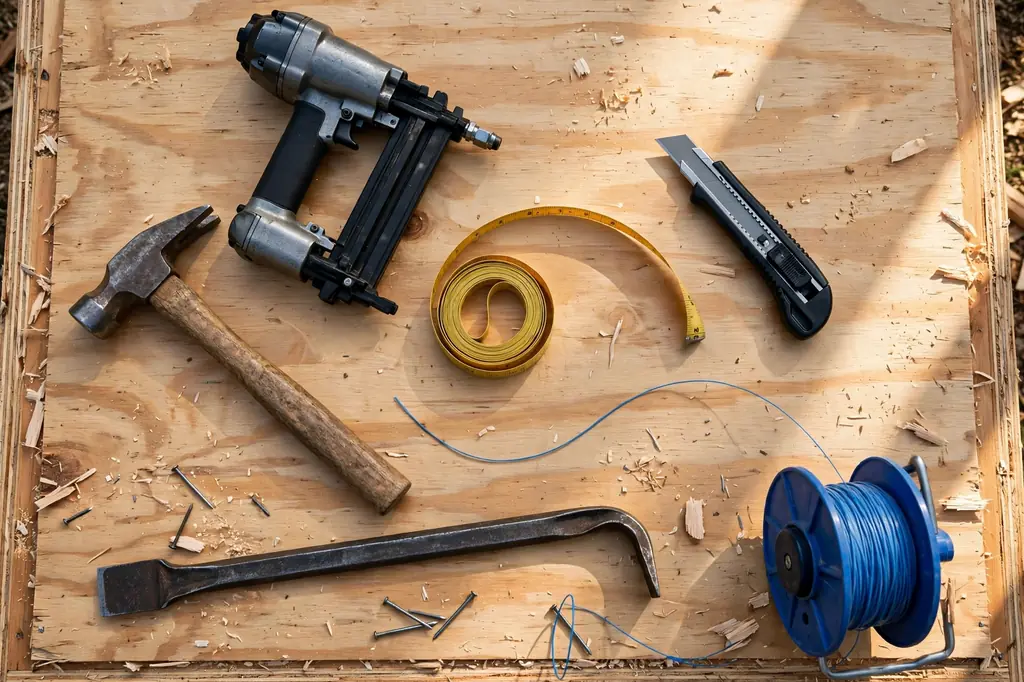
Where metal roofing fits
Metal Roofing Situations in South Bend
A re-roof considering metal
A homeowner weighing metal against asphalt shingle for a re-roof compares the two systems, the district status, and the snow-movement question. The shingle roofing page carries the other side of the comparison.
A district address
Inside a local historic district, the system question is constrained: exposed-fastener corrugated metal is not approved, standing seam may be considered. The COA comes before the permit, and the address is checked first.
A low-slope question
Low slopes present different detailing questions from steep ones, and the boundary between a metal solution and a low-slope solution is worth discussing. The flat roofing page covers low-slope systems generally.
Storm-damaged metal
Hail dents metal and wind displaces panels and flashing. Damage is documented with photographs and dates, and the scope follows the findings, on the storm damage sequence.
South Bend context
Metal Roofing Against South Bend Housing and Weather
Metal roofing in South Bend is discussed against the same three housing layers as every other material, with the district constraint added: the pre-1920 core and revival suburbs hold the locally designated districts, while the postwar ring holds the long low slopes. Lake-effect snow, with a 1991–2020 normal of 64.5 inches and a range from 39.0 inches in 2021 to 91.8 inches in 2022, makes snow movement a real planning question. Neighborhood notes below link to the Sunnymede, Near Northwest, and Lincoln Park pages.
Sunnymede
A 1920s subdivision where the East Wayne Street local historic district, designated in 1987, has an active COA process. The district constraint on metal systems applies directly here. Read the Sunnymede roofing notes.
Near Northwest
An umbrella neighborhood where four historic districts are named by the neighborhood organization itself, and where district membership is address-specific. The COA question is asked address by address. Read the Near Northwest roofing notes.
Lincoln Park
Early-1900s stock northwest of downtown, where the 2012 plan describes homes as built with gabled roofs, wood shingles, brick chimneys, and porches, alongside a live rebuild cohort. The two cohorts must not be conflated. Read the Lincoln Park roofing notes.
River Park
East-side stock developed primarily 1920–1960. Roof materials at neighborhood level are unverified, so the material question is answered address by address. Read the River Park roofing notes.
Wooded Estates
A subdivision split by Twyckenham Drive, with a plat recorded in 1946. Pitched, varied roofs are an inference from the forms. Read the Wooded Estates roofing notes.
Lake-effect snow
The NWS normal of 64.5 inches, with a wide range from 39.0 inches in 2021 to 91.8 inches in 2022, means snow movement off a metal roof is a planning question for every installation, along with the 30 psf ground snow load in the code values.
Wind
The design wind speed is 115 mph, and the June 23, 2019 EF2 tornado in Gulivoire Park is the dated local wind event. Fastening and edge detailing hold a metal roof against wind.
Hail
Secondary sources report hail up to 2.5 inches on July 20, 2023, and 2.75-inch hail on June 15, 2008. Hail dents metal visibly, which makes documentation straightforward; see hail damage.
Permits and COA
Re-roofing is permitted work, and in the HP Overlay the COA comes before the permit. The roof replacement page carries the permit and district education in full.
Problems we solve
Metal Roof Problems Addressed in South Bend
Each problem below is checked on the surface and in the attic together before any scope is written.
Fastener trouble on exposed-fastener roofs
Loosened fasteners and aged washers admit water at penetration points. The fasteners are checked across the roof, not only where water shows, since they share age and exposure.
Seam and flashing leaks
Leaks at seams, ridges, and flashing joints trace to movement, detailing, or displacement. The joint is addressed itself, rather than covered over.
Denting after hail
Hail dents metal panels and flashing visibly. Dents are documented with photographs and dates, and the scope follows the findings, including whether the denting affects weather-tightness.
Snow movement surprises
Snow sliding off all at once can damage gutters, landscaping, and anything below the eave. Where the snow goes is a planning question, asked before the roof goes on and revisited if it was not.
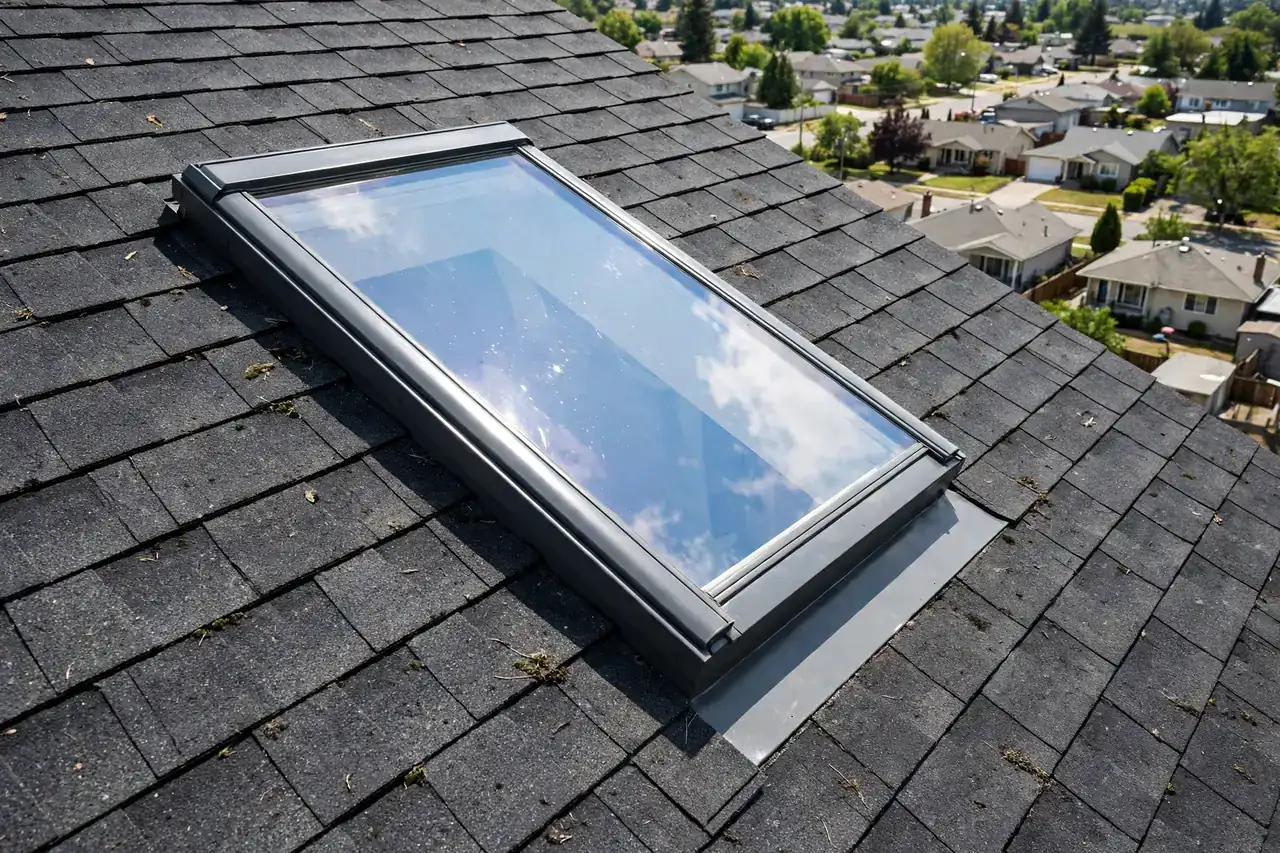
A practical standard for every visit.
Clear planningPrepared arrivalsCareful workLocal follow-through
What to expect
What a Metal Roofing Conversation Covers
A metal roofing conversation covers the inspection findings, the standing seam versus exposed fastener contrast, the district constraint for the address, and the permit steps. Quality Roofing LLC is a South Bend roofing contractor at 63251 Mulberry Rd, reachable by phone at (574) 901-6308 during listed hours. The metal versus shingle post compares materials from the homeowner side.
- Inspection findings: surface, deck, attic, and flashing, looked at together
- The standing seam versus exposed fastener contrast, stated plainly
- The district constraint for the specific address, confirmed before choosing
- Phone contact during listed hours: Mon–Fri 7 AM–7 PM, Sat 8 AM–8 PM, Sun Closed
- A 5.0-star rating from 23 Google reviews, with excerpts and a link to the Google profile below
Neighborhood pages
Neighborhood Pages for South Bend Roofing Notes
Downtown South BendNear NorthwestRiver ParkHoward ParkSunnymedeKeller ParkEdison ParkLincoln ParkLaSalle Park
See all neighborhood pages Notes from local customers
What South Bend Homeowners Say
I could not have asked for a better crew to redo my roof! They were kind, respectful, cleaned up everything when they finished. My roof looks awesome!
Outstanding people to work with. Great price and workmanship. Clean up was exceptional, very professional company.
Roberto is very good at what he does. Explains everything in detail. Also actually listens to the customer and doesn't try to sell you anything that is not really necessary!
Standing seam conceals the fasteners beneath raised, folded seams, so the weathering surface has far fewer penetration points. Exposed fastener drives screws through the panels, leaving visible fasteners and many penetration points that need recurring attention. That difference drives the maintenance, weather, and district discussion.
Under the Historic Preservation Commission Standards and Guidelines, exposed-fastener corrugated metal is not approved in the HP Overlay, and standing seam may be considered. The COA comes before the building permit, and the address should be checked against the district maps first.
Metal sheds snow more readily than rougher coverings, so snow movement off the roof, and where it lands, is a planning question for eaves, entries, and gutters. The code design values include a 30 psf ground snow load, and the NWS snowfall normal is 64.5 inches with a wide range from 39.0 inches in 2021 to 91.8 inches in 2022.
Yes. Re-roofing is permitted work through the joint St. Joseph County / City of South Bend Building Department, with separate cost lines for tear-off and overlay. In a locally designated historic district, the COA comes before the building permit.
Keep exploring
Other Roofing Services We Offer
Call during business hours
Talk About Metal Roofing in South Bend
Call Quality Roofing LLC at (574) 901-6308 during listed hours: Mon–Fri 7 AM–7 PM, Sat 8 AM–8 PM, Sun Closed. Describe the roof and the question, and the conversation starts from the findings and the system contrast.
Start with the basics
Contact Quality Roofing LLC
Call Quality Roofing LLC at (574) 901-6308 during business hours: Mon–Fri 7 AM–7 PM, Sat 8 AM–8 PM, Sun Closed. Phone is the contact channel for this business. The office address is 63251 Mulberry Rd, South Bend, IN 46614.