
Metal roofing vs shingle roofing: which lasts longer in Indiana
Metal roofing vs shingle roofing in Indiana is a comparison of considerations, not a measured verdict. This guide compares profiles, weather behavior, and historic-district rules, without lifespan figures or prices.
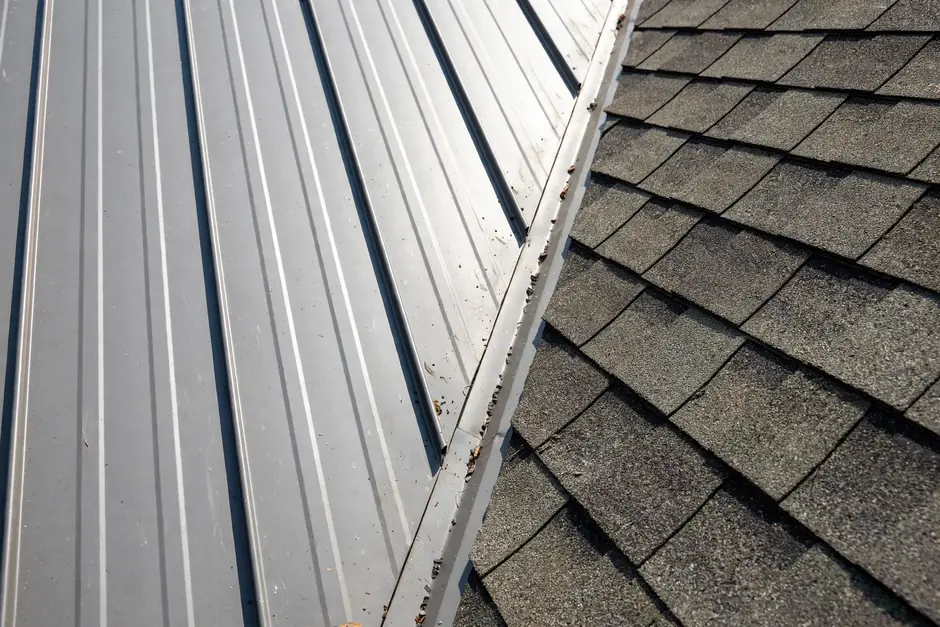
Metal roofing vs shingle roofing, which lasts longer in Indiana, has no measured answer in the sources for this guide, and none is invented here. No lifespan figures are stated for either material, and no prices are stated. What this guide offers is a comparison of the considerations that affect the choice in South Bend: profile and fastening, weather behavior, maintenance, and historic-district rules.
The short answer: metal and shingle roofs compared
Metal roofing and shingle roofing differ in profile, fastening, and behavior in snow, wind, and hail, and the right comparison weighs those differences against the specific roof, the district rules for the address, and the condition of the deck and flashing. Neither material wins on every consideration.
Standing seam metal, with concealed fasteners, and exposed-fastener metal are different profiles and should not be treated as one material. Architectural shingles and three-tab shingles are likewise different specifications within shingle roofing. The sections below keep those distinctions separate. See metal roofing and shingle roofing for the material pages.
What affects how long each material lasts in South Bend Indiana?
Service life is affected by installation detailing, flashing, ventilation, ice barrier, exposure, and maintenance, for both materials. No lifespan figure is stated here for either material, because none was sourced for this guide. Any figure offered without a source would be invented, and this guide does not invent figures.
Asphalt shingles: what affects service life
For asphalt shingles, service life is affected by specification, flashing detailing at chimneys, valleys, and penetrations, ventilation and ice barrier, and exposure to snow, wind, and hail. Granule loss, curling, and cracking are the visible signs of wear, and a roof inspection records them in writing.
Metal roofing: what affects service life
For metal roofing, service life is affected by profile and fastening, flashing and seam detailing, and the same ventilation and ice barrier considerations. Exposed fasteners and concealed fasteners age differently, and seam and flashing details deserve the same close attention as the panels themselves.
The comparison, then, is not a number against a number. It is a set of considerations weighed against an inspection record and a written scope for the specific roof. The cost guide explains why published figures conflict: roof replacement cost in South Bend: what to expect.
Why Indiana weather tests roofs
Lake Michigan puts South Bend downwind in a lake-effect snow belt. The 1991-2020 normals at the South Bend station record 64.5 inches of snowfall a year; recent seasons ranged from 39.0 inches in 2021 to 91.8 inches in 2022. The adopted code sets a 30 psf ground snow load, a 115 mph wind speed, and an ice barrier requirement for St. Joseph County. Snow load, ice, wind, and hail shape what either material must handle.
- Snow and ice. Snow sits on roofs for extended periods, and ice dams form where attic heat melts snow that refreezes at the eave. The ice barrier and attic conditions matter for both materials.
- Wind. The 115 mph design wind speed and dated storm events frame the exposure. Fastening, edge details, and flashing decide how either material behaves in wind.
- Hail. Dated hail events, 20 July 2023 and 15 June 2008, on secondary reports, frame the exposure. Hail dents metal visibly and bruises shingles, with different visible signs.
- Freeze and thaw. Repeated freezing and thawing works water into joints, flashing, and fastener points. Detailing at joints matters more than the field of either material.
For the winter mechanism in full, see how to prepare your roof for a South Bend winter. For hail signs, see signs your roof has hail damage after a South Bend storm.
Metal roofing vs shingle roofing cost in South Bend: drivers
No prices are stated in this guide. What can be said generally is that cost follows scope: profile and specification, tear-off or overlay, decking condition, flashing complexity, and access. A comparison that names only the material, without scope, cannot be compared with anything.
The drivers below apply to both materials, in different proportions:
- Upfront scope. Profile and specification, tear-off or overlay, decking, flashing, and access. Standing seam and exposed-fastener profiles differ in detailing scope.
- Ongoing scope. Fastener and seam attention, flashing checks, and ventilation and gutter care over time. Ongoing scope is part of the comparison, not an afterthought.
For cited third-party market figures with publishers and scopes, see roof replacement cost in South Bend: what to expect. No figure there is this business's pricing, and no dataset specific to South Bend exists.
A written scope for the specific roof, following an inspection, is the way to compare. See roof replacement for the permit and code side.
Metal roofing pros and cons South Bend Indiana homeowners should weigh
Metal roofing considerations, weighed honestly, include both the profile advantages and the constraints. The lists below separate the two.
Pros
- Concealed fasteners on standing seam profiles, with fewer exposed fastener points
- Panel profiles that shed snow readily, subject to detailing at eaves and valleys
- Visible hail denting that shows exposure plainly, which aids inspection
- Profile variety, including standing seam that may be considered in historic districts
- Long panel runs that reduce horizontal seams on suitable slopes, subject to flashing and valley detailing
Cons
- Exposed-fastener corrugated metal is not approved in locally designated historic overlays
- Hail denting is visible and may be a cosmetic concern even where function is unaffected
- Noise perception in rain and hail, which varies with assembly and insulation
- Detailing demands at flashing, valleys, and penetrations, where errors show quickly
Shingle considerations run in parallel: specification variety, familiar flashing details, and visible wear signs, weighed against granule loss, curling, and seal behavior in wind. See shingle roofing for the shingle comparison, including architectural against three-tab.
What to watch out for with either material
Watch for comparisons that promise a lifespan number, a price, or a verdict without an inspection record or a written scope. Those promises are invented, and this guide does not repeat them.
- Lifespan promises without sources. No lifespan figure is stated here for either material. Treat any unsourced figure as invented.
- Ignoring district rules. In locally designated historic overlays, exposed-fastener corrugated metal is not approved, standing seam may be considered, and in-kind asphalt re-roofs are administratively approvable. The Historic Preservation Commission decides. See roofing in Sunnymede for a district with an active review process.
- Ignoring ventilation and ice barrier. Both materials depend on the same attic conditions and the same code-required ice barrier. Material choice does not replace attic work.
- Choosing on price alone. A price without scope, profile, and specification cannot be compared. The written scope is the comparison.
- Assuming the existing roof dictates the new one. In historic overlays, existing slate, tile, metal, and asbestos roofs may be replaced only if more than 50 percent deteriorated beyond repair. Check the address before assuming a material change is open.
For gutter and drainage detailing that supports either material, see gutter installation. For the inspection that grounds the comparison, see roof inspection.
When to call a professional
Call a professional when the roof shows widespread wear, when flashing or decking problems are suspected, when the address falls in a historic overlay, or when you need a written scope for comparison. An inspection record comes before a material decision.
Quality Roofing LLC is a roofing contractor at 63251 Mulberry Rd, South Bend, IN 46614. Calls are answered during business hours: Mon-Fri 7 AM-7 PM and Sat 8 AM-8 PM, closed Sunday. The business holds 5.0 stars from 23 Google reviews. Call (574) 901-6308 during business hours to discuss an inspection.
Frequently Asked Questions
How should I compare expected service life for metal and shingle roofing?
By the considerations that affect service life, not by a published number. No lifespan figures are stated here, because none were sourced for this guide. Profile, fastening, flashing, ventilation, ice barrier, and maintenance all affect how long either material serves.
How do I choose between metal and shingle roofing in South Bend Indiana?
Weigh profile and fastening, snow and hail behavior, district rules where they apply, and the condition of the deck and flashing. A written scope for the specific roof, following an inspection, is the way to compare.
What affects shingle and metal service life in South Bend IN?
Installation detailing at flashing, valleys, and penetrations, ventilation and ice barrier, exposure to snow, wind, and hail, and ongoing maintenance. No lifespan figure is stated here for either material.
What should I weigh when choosing a roofing material for Indiana weather?
Snow load and ice barrier requirements, wind exposure, hail behavior, and the district rules for the specific address. The adopted code sets a 30 psf ground snow load and a 115 mph wind speed for St. Joseph County.
Is metal roofing worth it in South Bend IN?
That depends on the specific roof, the profile chosen, district rules, and the written scope. No verdict is offered here. Compare the considerations in this guide against an inspection record and a written scope for the specific roof.
Get help with Roofing in South Bend
Material choice follows inspection, district checks, and a written scope, in that order. Call Quality Roofing LLC at (574) 901-6308 during business hours to discuss an inspection for your South Bend roof.