
Signs your roof has hail damage after a South Bend storm
Hail damage on a roof is often subtle: bruised shingles, dislodged granules, and dented metal. This guide explains the signs, how to check safely, and what to document after a South Bend storm.
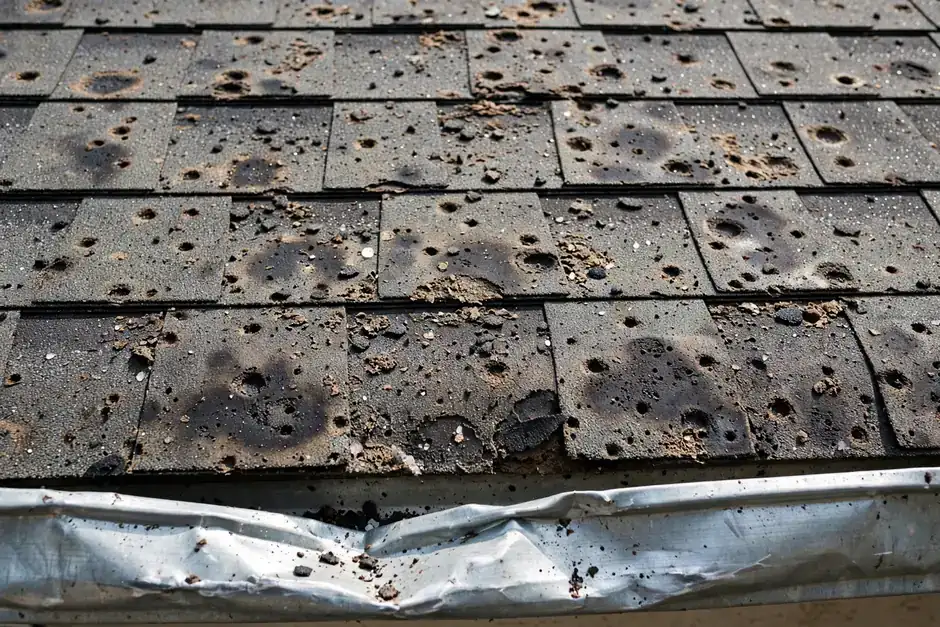
Signs your roof has hail damage after a South Bend storm are often easy to miss from the ground. Hail bruises shingles, dislodges granules, and dents metal, and the damage that matters most is not always the damage that is most visible. This guide explains what hail damage looks like, how to check safely, and what to document.
Two dated hail events anchor the local picture, both from secondary reports: hail up to 2.5 inches between South Bend and Elkhart, with 1.5 inches at Ironwood and McKinley, on 20 July 2023, and 2.75-inch hail on 15 June 2008. No hail-day count appears here, because counts conflict by radius and period and must not be merged.
What hail damage on a roof actually looks like
Hail damage on asphalt shingles usually shows as bruising: a softened spot where the hail struck, often with granules dislodged around it. The bruise may not be visible from the ground. It is found by touch during a close look, which is one reason a ground check alone cannot settle the question.
Metal tells the story more plainly. Dents in gutters, downspouts, flashing, vents, and other metal roof components are visible from the ground and suggest the roof surface took hits as well. Cracked, split, or displaced shingles, and ridge caps that have shifted, are also signs worth a closer look.
Interior signs follow the same logic as any leak: stains on ceilings or walls, bubbling paint, and damp insulation in the attic after a storm. Interior signs do not prove hail caused them, and they do not show the scope of roof damage. They are a prompt for a professional look, documented in writing. See hail damage roof repair for the repair side.
How to check your roof for hail damage after a South Bend storm
Checking a roof after hail starts from the ground. Safety comes first: wet roofs, damaged surfaces, and storm debris make climbing unsafe, and walking a damaged roof can make damage worse. A ground check, binoculars, and photographs cover the first pass.
- Walk the perimeter from the ground. Look for dents in gutters and downspouts, damaged vents and flashing, displaced shingles on the ground, and debris patterns that show where hail fell hardest.
- Check where downspouts discharge. Granules collecting at downspout outlets, in gutters, or at the base of the house suggest shingle surfaces took hits. Note what you find rather than drawing conclusions from it alone.
- Look in the attic. New staining, damp insulation, and daylight through the deck show up from inside. Photograph anything new, with the date noted.
- Photograph everything, dated. Photographs of visible damage, dents, and interior signs, kept with the storm date, form the record. Documentation is the step that supports every later conversation.
- Arrange a professional look. A roof inspection covers the surface, flashing, and attic together, and produces a written record. The surface check, including bruising, belongs to that visit.
Do not climb onto a wet or damaged roof to check for hail. The ground check plus a professional visit covers the question without the fall risk or the risk of further surface damage.
7 signs of hail damage on a South Bend roof
The signs below warrant a closer look. None of them, alone, proves the scope of damage or settles repair against replacement. That decision follows an inspection record.
- Bruised or softened shingles. Spots that feel soft or spongy where hail struck, often with granules missing around the impact.
- Granule loss. Bare patches on shingles, or granules collecting in gutters and at downspout outlets after a storm.
- Dented metal. Dents in gutters, downspouts, flashing, vents, and other metal components, visible from the ground.
- Cracked or split shingles. Shingles fractured by impact, or tabs that have lifted or shifted out of line.
- Displaced ridge caps. Ridge caps that have moved, cracked, or lost pieces along the roof peak.
- Damaged vents and penetrations. Cracked vent covers, dented pipe boots, and displaced flashing around penetrations.
- Interior staining after the storm. New stains on ceilings or walls, or damp insulation in the attic, following a hail event.
If several signs appear together, the case for a prompt professional look is stronger. If only one sign appears, it is still worth recording and checking, because hail damage is uneven by nature.
Why hail damage varies from one roof to the next
Hail damage varies because hail itself is uneven. Hail falls in bands and cells, so one street can take heavy hits while another, nearby, takes few. Roof pitch, shingle condition, and the direction a slope faces also affect which surfaces show damage.
No neighborhood-level hail evidence exists for South Bend, and this guide makes no claim that any neighborhood is hit harder than another. The dated events above are the local evidence, and they describe specific storms, not a pattern by neighborhood.
Age and condition matter too. A roof with worn shingles shows hail effects differently from a newer roof, and prior repairs, flashing condition, and deck condition all shape what an inspection finds. The inspection record, not assumptions about the area, is what supports the next step. See roof repair for how repair scope is weighed.
Does hail damage always require roof replacement in South Bend IN?
No. Hail damage does not always require roof replacement. Whether repair or replacement fits depends on the extent and location of the damage, the condition of the deck and flashing, the number of existing roof layers, and the roof as a whole. A localized area of bruising and a roof-wide pattern of damage lead to different answers.
The decision guide how to tell if your roof needs repair or full replacement sets out the considerations in full, including the tear-off and overlay distinction in the permit form. No threshold in this guide turns the decision into a rule.
What matters after hail is the record: dated photographs, the inspection findings in writing, and a written scope for whatever work is proposed. That record supports the decision and any later conversation with an insurer.
Common mistakes homeowners make after a hail storm
Mistakes after a hail storm usually come from haste: signing before documenting, accepting a surface-only look, or treating a door-to-door offer as an inspection.
The patterns to avoid:
- Signing before documenting. Photographs and a written inspection record come before any commitment. A decision made without documentation is hard to revisit.
- Accepting a ground-only verdict. A ground check is a first pass. Bruising and flashing damage need a close look, and the attic needs checking too.
- Ignoring the attic. Interior and attic signs show whether water has already found a path. A surface-only visit leaves that question open.
- Treating every offer as equal. Ask what any visit covers, whether findings arrive in writing, and what registration and insurance paperwork the contractor can show.
- Waiting to document. Photographs taken close to the storm, with the date noted, are more useful than photographs taken weeks later. Document first, decide second.
For the repair side, see hail damage roof repair and storm damage roof repair. For wind that arrives with the same storm, see what to do after wind damage knocks shingles off your roof.
When to call for a hail damage roof inspection in South Bend
Call a professional when you see several of the signs above, when interior staining appears after a storm, when shingles are displaced or flashing is visibly damaged, or when you need a written record for an insurer or a purchase decision.
Quality Roofing LLC is a roofing contractor at 63251 Mulberry Rd, South Bend, IN 46614. Calls are answered during business hours: Mon-Fri 7 AM-7 PM and Sat 8 AM-8 PM, closed Sunday. The business holds 5.0 stars from 23 Google reviews.
A roof inspection after hail covers the surface, flashing, penetrations, and attic, and produces the written record that supports the next step. Call (574) 901-6308 during business hours to discuss an inspection, or see emergency roof repair for urgent water entry within business hours.
Frequently Asked Questions
What are the signs of hail damage on a roof in South Bend IN?
Bruised or softened shingles, granule loss, dents in metal flashing, vents, and gutters, cracked or displaced shingles, and interior staining after a storm. Signs warrant a closer look. They do not by themselves prove the scope of damage.
How do I know if my roof has hail damage in South Bend Indiana?
Check from the ground first: dents in gutters, downspouts, and vents, and granules collecting where downspouts discharge. The roof surface needs a professional look, because bruising is felt as much as seen. Document what you find with dated photographs.
Does hail damage always require roof replacement in South Bend IN?
No. Whether repair or replacement fits depends on the extent and location of the damage, the condition of the deck, and the roof as a whole. An inspection record, not the hail event alone, is what supports the decision.
Who should I call for hail damage roof inspection in South Bend Indiana?
A roofing contractor who will document findings in writing with photographs. Ask what the visit covers and what registration and insurance paperwork the contractor can show before booking.
What should I document after a hail storm in South Bend IN?
The date and approximate time of the storm, photographs of visible damage from the ground, dents in gutters and vents, interior stains, and any debris. Keep the record with the inspection findings. Documentation supports any later conversation with an insurer.
Get help with Roofing in South Bend
After a hail storm, document first and decide second. Call Quality Roofing LLC at (574) 901-6308 during business hours to discuss a documented inspection for your South Bend roof.