
Roof Inspection
Roof Inspection in South Bend, IN for Buyers, Storms, and Upkeep
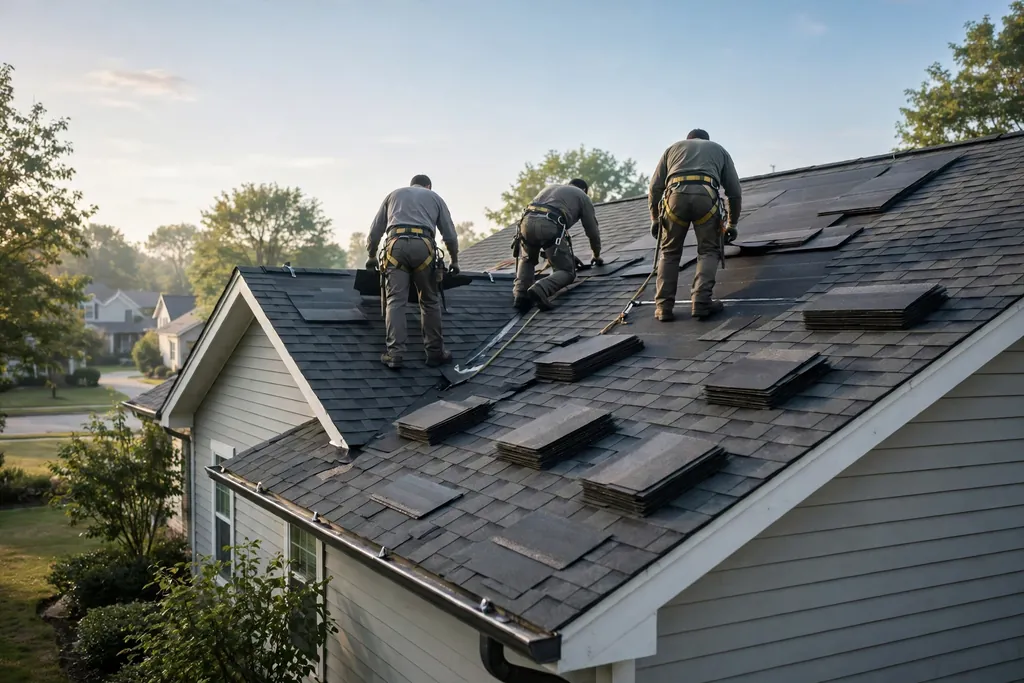
Roof inspection in South Bend, IN, serves three different moments: buying a home, checking after a storm, and keeping up with maintenance. This page covers all three in one place, with a summary of ice-dam prevention pointing to the dedicated ice-dam prevention page, because splitting them would only repeat the same ground three times. Findings are explained with photographs where helpful, and the record left behind is written down. For work that follows an inspection, see roof repair or roof replacement. Call (574) 901-6308 during business hours.
Service overview
What a Roof Inspection Covers, Generally
A roof inspection looks at the roof as a system: the covering across the field, the flashing at chimneys, walls, skylights, and penetrations, the valleys and transitions, the attic and ventilation, and the gutters and drainage at the eaves. The point is findings, stated plainly: what is sound, what needs attention, and what should be watched. The inspection frequency post discusses timing from the homeowner side, and the roof maintenance page carries the general upkeep education that follows an inspection.
An inspection does not decide anything by itself. It gives the homeowner, buyer, or seller a written record to decide from, whether the next step is a targeted repair, a replacement conversation, a discussion grounded in findings, or simply watching and waiting. No single schedule fits every roof: age, prior layers, storm history, and attic conditions all bear on timing, and this page states no universal interval. What is stated is the coverage: surface, attic, flashing, and drainage, looked at together rather than in isolation.
Coverage
Four Areas Every Inspection Looks At
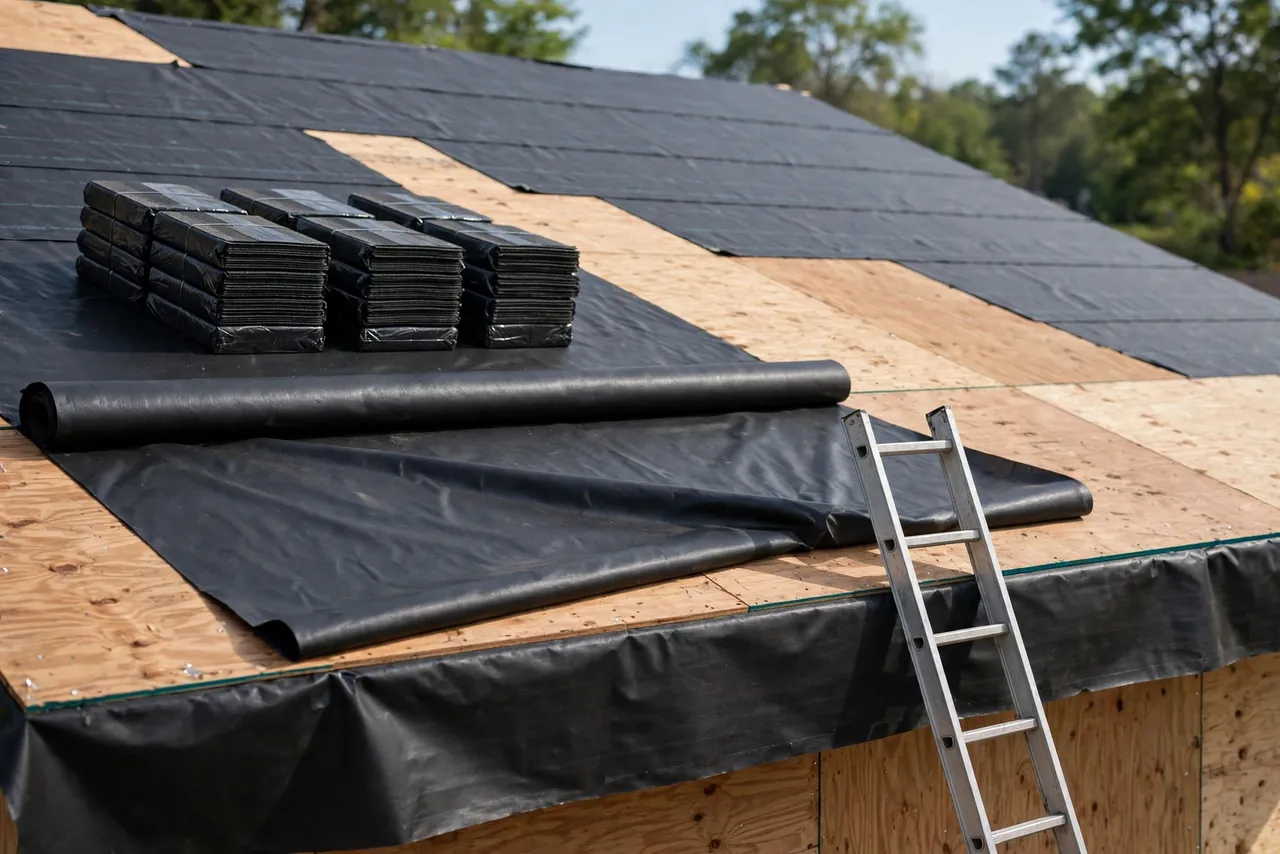
These four areas are checked together. A problem in one often explains a symptom in another.
The roof surface
The field is checked for missing, lifted, curled, or cracked covering, for granule loss, and for wear concentrated in valleys and at transitions. The surface tells the story of weather and age, but only part of it.
The attic and ventilation
The attic is checked for daylight, damp framing, staining, and ventilation balance: intake at the eaves and exhaust at the ridge, working as a pair. Attic findings often explain surface symptoms, including ice dams.
Flashing and penetrations
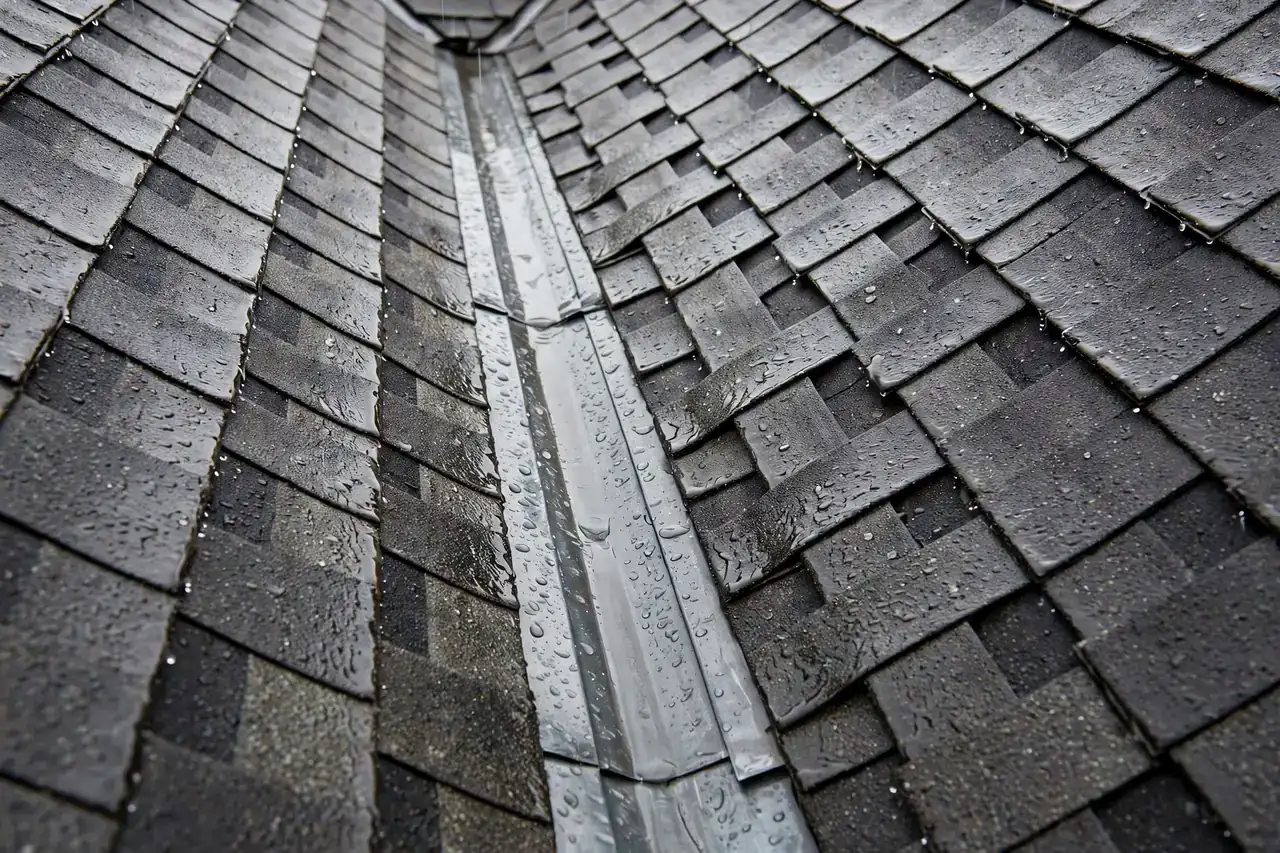
Chimneys, walls, skylights, dormers, and pipe boots interrupt the field, and their flashing is checked joint by joint. The chimney flashing and skylight repair pages cover the most involved of these details.
Gutters and drainage
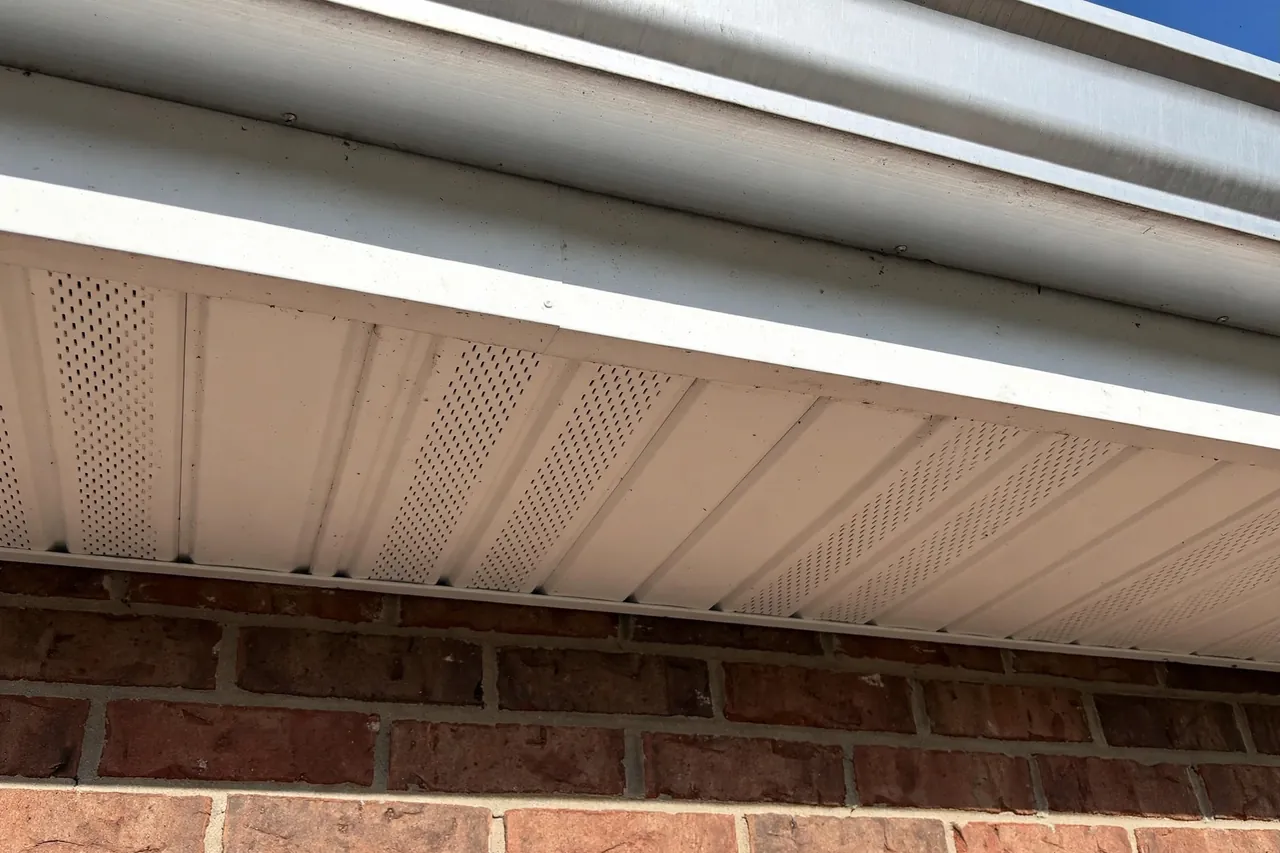
Gutters, downspouts, and the eave edge are checked for blockage, overflow, and damage, since water that cannot leave the roof backs into it. See gutter installation and gutter repair for the drainage detail.
How the work proceeds
How a Roof Inspection Proceeds, Step by Step
The sequence is the same across the three use cases. What differs is the question the inspection is answering.
STEP 01
Call and state the question
Buying, storm-checking, or maintaining: the question shapes what gets emphasized. The address, the roof history as known, and any storm date involved are taken down first.
Ice-dam prevention
Ice-Dam Prevention: Ventilation, Insulation, and Air Sealing
How an ice dam forms
House heat that reaches the attic warms the roof above it, and snow over that warm patch starts to melt from underneath. The water runs toward the eaves, refreezes where the roof is cold again, and the ice ridge that forms there backs later meltwater up under the covering.
Prevention is three measures together
Keeping the deck cold takes ventilation moving air through the attic, insulation slowing heat from below, and air sealing closing the gaps warm air travels through — all three at once. Heat cables can only help at one trouble spot and leave the attic warmth untouched, so they sit beside the three measures rather than standing in for them.
Full guidance
The full explanation — how each measure works, what a prevention check looks at, and the signs worth attention in winter — is on the dedicated ice-dam prevention page. No published count says how often South Bend roofs develop ice dams, so this site gives no frequency number and rests the case on the mechanism instead.
Three use cases
Pre-Purchase, Storm, and Maintenance Inspections
Pre-purchase inspection
A buyer needs to know the roof's condition before committing: covering, flashing, attic, and drainage, with findings in writing. The record supports a decision grounded in evidence rather than in the seller's word or the roof's appearance from the street.
Storm inspection
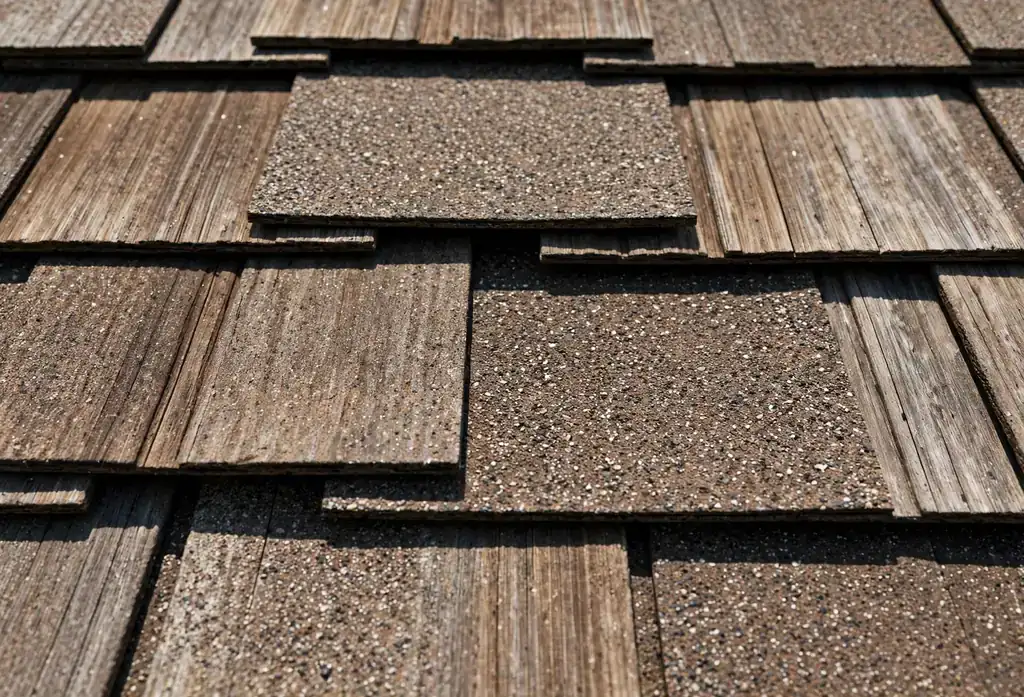
After a dated storm, an inspection looks for damage that is not visible from the ground: lifted seals, bruised covering, displaced flashing. Photographs and dates matter here, since the record may support a conversation with the insurer; see the storm damage page for documentation checklists.
Maintenance inspection
A maintenance inspection checks the same four areas on a routine basis, looking for small failures before they become leaks: opening joints, wearing valleys, blocked drainage. Timing depends on the roof's age, history, and attic conditions, not on a universal interval.
Selling a home
A seller-side inspection answers the buyer's questions before they are asked, with findings in writing and a scope for anything needing attention. A documented roof removes an objection before a buyer raises it.
South Bend context
Roof Inspection Against South Bend Housing and Weather
South Bend's three housing layers, pre-1920 core, revival suburbs, and postwar ring, present different inspection questions: layered coverings and old flashing in the core, dormer and valley joints in revival suburbs, and long low slopes on postwar ranches. Lake-effect snow, with a 1991–2020 normal of 64.5 inches and a range from 39.0 inches in 2021 to 91.8 inches in 2022, and the 115 mph design wind speed frame the weather side. Neighborhood notes below link to the Lincoln Park, River Park, and North Shore Triangle pages.
Lincoln Park
Early-1900s stock northwest of downtown, where the 2012 neighborhood plan describes homes as built with gabled roofs, wood shingles, brick chimneys, and porches, alongside a live rebuild cohort of 92 homes from October 2024 to 2029. The two cohorts must never be conflated. Read the Lincoln Park roofing notes.
River Park
East-side stock developed primarily 1920–1960, with a substantial renter and investor presence. Inspection records matter here for landlords and buyers alike, since turnover is frequent. Read the River Park roofing notes.
Near Northwest
An umbrella neighborhood with a Victorian, Foursquare, and bungalow core plus post-2019 infill, where boundaries vary by source and district membership is address-specific. An inspection here may need to note which district, if any, covers the address. Read the Near Northwest roofing notes.
Sunnymede
A 1920s subdivision with mixed revival and Foursquare stock, where the East Wayne Street local historic district has an active COA process. An inspection finding that leads to work may need the COA-before-permit sequence. Read the Sunnymede roofing notes.
North Shore Triangle
River-curve vintage stock spanning early-1900s homes through mid-century ranches, with documented 2016 and 2018 flood and sewage-backup history. Drainage, grade, and downspout pathways deserve attention alongside the roof covering. Read the North Shore Triangle roofing notes.
Lake-effect snow
The NWS normal of 64.5 inches, with a wide range from 39.0 inches in 2021 to 91.8 inches in 2022, means snow load and ice-barrier questions belong in every inspection conversation here, along with the 30 psf ground snow load in the code design values.
Wind
The design wind speed is 115 mph, and the June 23, 2019 EF2 tornado in Gulivoire Park is the dated local wind event. Storm inspections check for lifted seals and displaced flashing that are not visible from the ground.
Hail
Secondary sources report hail up to 2.5 inches on July 20, 2023, and 2.75-inch hail on June 15, 2008. Hail inspection looks for bruising and granule loss; the hail damage page reports the events in full.
Ventilation and ice dams
Attic warmth, ventilation balance, and air sealing are the ice-dam prevention themes, covered substantively in the section above. An inspection that skips the attic skips the mechanism.
Problems we solve
Problems a Roof Inspection Answers in South Bend
An inspection answers questions. Each problem below is a question worth answering before deciding anything.
Buying without knowing the roof
A roof can look sound from the street while the attic tells a different story. A pre-purchase inspection puts findings in writing before the commitment is made.
Storm damage unseen from the ground
Lifted seals and bruised covering are not visible from the yard. A storm inspection looks at the surface and the attic together, with photographs and dates for the record.
Slow attic moisture
Damp framing or staining found early is a small conversation. Found late, after ceilings stain, it is a larger one. The attic check is what catches it early.
Recurring ice dams
Ice dams that return every winter point to attic warmth, ventilation, or air sealing rather than to the eaves alone. The prevention section above sets out the mechanism and the themes.
A practical standard for every visit.
Clear planningPrepared arrivalsCareful workLocal follow-through
What to expect
What a Roof Inspection Conversation Covers
An inspection conversation starts with the question being asked: buying, storm-checking, maintaining, or selling. Quality Roofing LLC is a South Bend roofing contractor at 63251 Mulberry Rd, reachable by phone at (574) 901-6308 during listed hours. The inspection frequency post and the winter preparation post cover timing and seasonal checks from the homeowner side.
- The question stated first: purchase, storm, maintenance, or sale
- Coverage of surface, attic, flashing, and drainage, looked at together
- Findings explained with photographs where helpful, and left in writing
- Phone contact during listed hours: Mon–Fri 7 AM–7 PM, Sat 8 AM–8 PM, Sun Closed
- A 5.0-star rating from 23 Google reviews, with excerpts and a link to the Google profile below
Neighborhood pages
Neighborhood Pages for South Bend Roofing Notes
Downtown South BendNear NorthwestRiver ParkHoward ParkSunnymedeKeller ParkEdison ParkLincoln ParkLaSalle Park
See all neighborhood pages Notes from local customers
What South Bend Homeowners Say
Roberto is very good at what he does. Explains everything in detail. Also actually listens to the customer and doesn't try to sell you anything that is not really necessary!
Quality Roofing did a great job on our roof. They showed up as promised and our roof was completed in 2 days, including tearing off the old shingles, and replacing several sheets of plywood. We are very happy with their work.
Outstanding people to work with. Great price and workmanship. Clean up was exceptional, very professional company.
No single schedule fits every roof. Age, prior layers, storm history, and attic conditions all bear on timing. A roof that has been through a dated storm, or one showing attic moisture, calls for a look sooner than a younger roof with no symptoms. This page states no universal interval.
The covering, flashing, valleys, attic and ventilation, and gutters and drainage, with findings left in writing. The record supports a buying decision grounded in evidence, including what needs attention now and what should be watched.
Photographs of the damage, the date and nature of the storm, and the findings from the surface and the attic together. Dated, photographed records are what a conversation with the insurer is built on; documentation checklists are on the storm damage page.
An inspection can identify the conditions behind ice dams: attic warmth, ventilation imbalance, and air leakage. Prevention itself is ventilation, insulation, and air sealing, covered substantively in the ice-dam prevention section above. Heat cables are only ever a limited adjunct, never a standalone fix.
Keep exploring
Services That Pair With a Roof Assessment
Call during business hours
Talk About a Roof Inspection in South Bend
Call Quality Roofing LLC at (574) 901-6308 during listed hours: Mon–Fri 7 AM–7 PM, Sat 8 AM–8 PM, Sun Closed. State the question the inspection should answer, and the conversation starts from there.
Start with the basics
Contact Quality Roofing LLC
Call Quality Roofing LLC at (574) 901-6308 during business hours: Mon–Fri 7 AM–7 PM, Sat 8 AM–8 PM, Sun Closed. Phone is the contact channel for this business. The office address is 63251 Mulberry Rd, South Bend, IN 46614.